> For the complete documentation index, see [llms.txt](https://docs.cyberawaresecurity.com/llms.txt). Markdown versions of documentation pages are available by appending `.md` to page URLs; this page is available as [Markdown](https://docs.cyberawaresecurity.com/admin-portal/authorised-domains.md).
# Authorised Domains
## Authorised Domains Guide
In this article, we explain the process of adding **Authorised Domains** as an **admin** on the admin portal. This will allow you to issue training and phishing campaigns for your users, using email addresses that derive from such domains.
**Prerequisites:**
Before adding a domain, ensure that the requirements below are met:
* You own the domain.
* You can whitelist emails sent to the domain.
* You can add a TXT record for the authorised domain to the DNS server.
**1.** Click on the **drop-down** list to view more than 10 entries in a single page:

**2.** Click on the following button to create a **new** authorised domain:

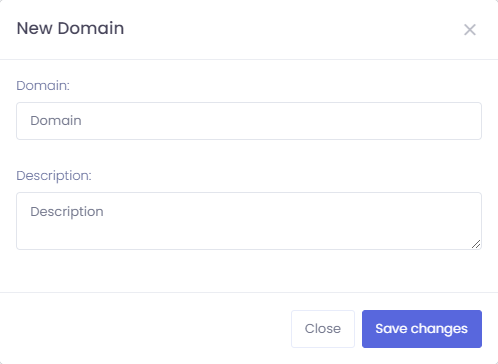
You should expect the following output:
**3.** Fill the details required and select **Close** or **Save changes:**
**4.** For this example, we will be using a domain called **example.com.**
You should receive a similar prompt with a unique txt record for verification:

All the information is provided accordingly, but for security purposes, they are hidden in these images.
**5.** As mentioned in the image above, create a **txt record** for your corresponding domain in your **DNS provider.**
**6.** To do that, open a new window and access your **DNS.** From there, select the **Add Record** and set the **Record Type** to **TXT Record:**

**7.** Then, paste **your unique txt** record in the text box:

**8.** Click **Add Record** to save it or **Cancel** to step back:

**9.** If you have added the record, return to your **Verify domain** prompt in the platform:

**10.** If you choose to **Close,** the process will finalise without verifying the domain and you will have to repeat the process of verification again:

**11.** From there, you can also edit the soon-to-be authorised domain by clicking on the **pencil** symbol:

**12.** Alternatively, if you select **Verify Domain,** a confirmation window will appear. Click **OK** to proceed.

**13.** As we can see, the domain has been authorised as requested!

**14.** You can always delete a domain. To do so, click on the **trash can** button:

**15.** Select **Delete** to confirm your action or **Cancel** to maintain the domain.

**16.** If you’ve chosen to delete the domain, a confirmation prompt should pop up. Select **OK** to finalise!